


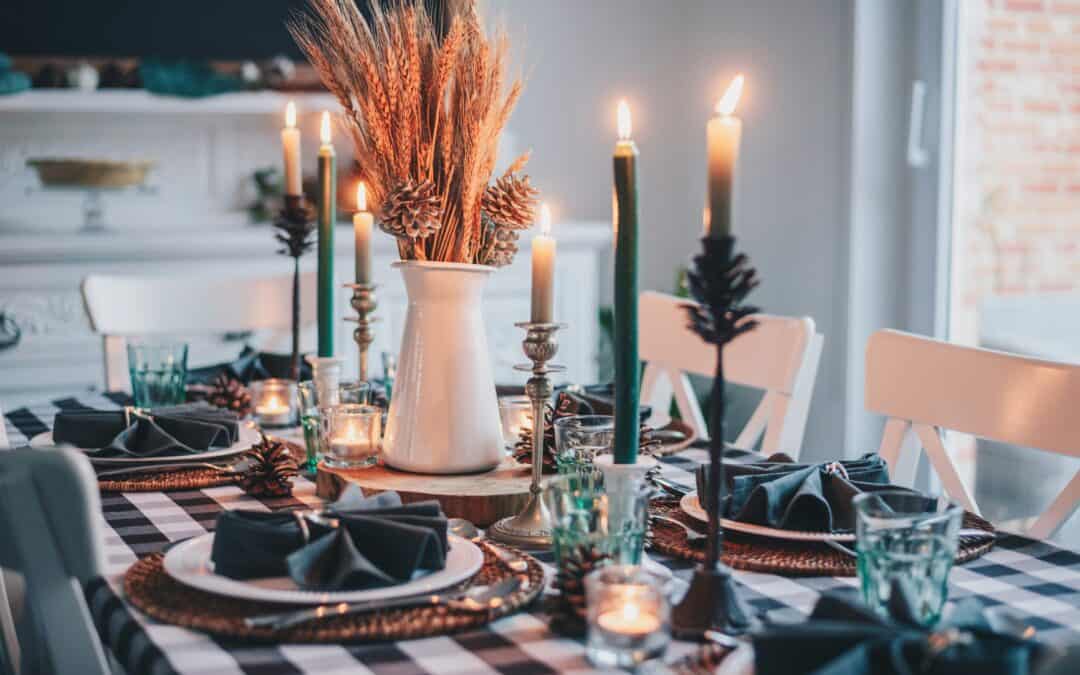
Let’s be honest, going home for the holidays typically comes with mixed feelings. You’re excited to meet your parents’ new dog, catch up with old friends, and take part in the classic family traditions, but you also dread seeing your Aunt Linda who won’t stop talking about the new diet she’s on (wonder which one it is this year?), hope your family doesn’t have a scale in the bathroom to tempt you, and wonder what you’re going to do if you have urges to engage in eating disorder behaviors without your cozy weighted blanket and favorite fall candle you usually cuddle up in when experiencing an urge.
For someone who struggles with bulimia, the typical anticipatory holiday anxiety that anyone might experience is compounded by changes in routine, triggering family members, decreased privacy, and potentially less support from their therapist, dietitian, or recovery group. Home environments can also bring up old eating disorder patterns and emotions. In this blog, we’re sharing tips for navigating bulimia recovery during the holidays.
Tips for Being Home During Bulimia Recovery
Maintain a Regular Eating Pattern
Keeping as close to your usual schedule as possible creates a flow that doesn’t feel so different from your normal routine. For example, if you typically have 3 meals around 9am, 1pm, and 6pm, plus 3 snacks at 11am, 3pm, and 8pm, try to stay within that schedule. It doesn’t have to be perfect, give yourself some flexibility, but the more mindful you are about staying in a flow, the more natural the transition home will feel.
Keep Busy
Distraction, distraction, distraction. An old, reliable coping skill. Being busy might happen without an intentional plan since the holidays can be packed with events, but if you find yourself in for a more low-key holiday, it might be worth looking into what’s happening nearby, local festivals or markets, live music, sightseeing, or reaching out to old friends to catch up.
Consider Where You Sleep
Nighttime is a common trigger for eating disorder behaviors, so it may be protective to think through your sleeping arrangements. If you find being alone increases your urges, ask to share a room with your sister or favorite cousin. This extra one-on-one time might be a nice bonus, since sharing a room is conducive to late night talks and Christmas movie watching.
On the other hand, if you find you have decreased urges when you have some alone time at the end of the day to drink your tea and read your book, request a room by yourself if one is available.
Asking for a specific sleeping arrangement can feel awkward, especially in a full house during the holidays, but it’s a reasonable request. If it protects your recovery, it’s also plenty reasonable to consider staying in a hotel or Airbnb for the weekend instead.
Expect Triggers and Have a Plan at the Table
Be prepared for diet culture comments to come up at the table, and have a cope-ahead plan. This might look like practicing (yes, literally practicing in the mirror) a scripted response to diet culture comments, or making a plan such as deciding to excuse yourself to the bathroom when these conversations come up.
Maintain Your Support
If you can continue to meet with your therapist, dietitian, recovery coach, or another support person, do it. This might mean planning ahead to make sure you’re able to be in a private area with good wifi at the time of your session. This can include your car, as long as it has a reliable connection.
Recovery support shouldn’t take a break for the holidays. If you need a dietitian in your corner going into this season, schedule a consultation with Courage to Nourish.
Give Yourself Grace
There’s a chance you might slip up, and that’s okay.
It doesn’t mean you’ve lost all of your progress. It doesn’t mean you’re a failure. It doesn’t mean you should give up on your recovery.
The holidays can be an extremely triggering time of year. Food is unpredictable. Families are unpredictable. Emotions are unpredictable. Recovery is unpredictable. But that doesn’t mean it’s not possible.
Frequently Asked Questions
Is it normal to have urges during the holidays even in recovery? Yes. Changes in routine, environment, and support access can all increase urges, even for people who are otherwise doing well in recovery. Having urges doesn’t mean recovery isn’t working, it means the holidays are a genuinely higher-risk time, which is exactly why having a plan ahead of time helps.
What if I don’t have privacy to talk to my therapist or dietitian while I’m home? Try to plan ahead for a private space and time, even if that means stepping outside or sitting in your car with a reliable connection. If a full session isn’t possible, a shorter check-in call or message with your provider can still help you feel supported.
Final Thoughts on Recovery During the Holidays
Going home for the holidays while in eating disorder recovery may seem insurmountable, but with the right balance of strategies and support, it’s totally possible to maintain recovery and still have some fun.
Connect With Us
If you found this article helpful and think you’d benefit from more support, don’t hesitate to reach out to Courage to Nourish. You can call us at (301) 202-4532 or book a complimentary discovery call online All of our dietitians are warm, compassionate, and knowledgeable individuals who specialize in eating disorders. We’d love to learn more about you and your story.
Haley joined Courage to Nourish because she shares an anti-diet, weight neutral philosophy in her treatment strategies and she wanted to work in an outpatient setting to foster deeper connections with clients focusing on helping clients repair their relationships with food
and their bodies. To learn more about Haley and her practice style, click here.
We align ourselves with the Health at Every Size© or HAES© approach and value diversity and inclusion.
We believe every individual deserves compassionate and adequate care. Not only do we work through a weight inclusive framework, but we also promote anti-racism, gender inclusivity, and are neurodivergent friendly and affirming. We aim to make our nutrition counseling a safer and non-judgmental space for ALL humans.
If health is something you’d like to work toward, we focus on health promoting behaviors instead of changing body shape and size. We do not provide diet or weight loss services. We welcome and encourage conversations about how various identities our clients hold impact their relationship with food, body and movement. Our team is committed to learning, growing and taking action when it comes to advocating for our clients' wellbeing.
Read more about HAES by visiting The Association For Size Diversity and Health (ASDAH)'s website.


Columbia
9841 Broken Land Pkwy Suite 106
Columbia, MD 21046
Alexandria
707 Oronoco Street
Alexandria, VA 22314
Virginia Virtual Options:
Richmond, VA
Charlottesville, VA