


I didn’t always have an eating disorder.
I had chronic asthma.
When I was younger, mold and mildew in my school triggered life-threatening asthma attacks that led to years of being on and off steroids. Those medications saved my lungs, but they changed my body—and how people saw it.
I remember how puffy I looked in pictures.
I remember how different I felt.
And I remember the quiet shame that grew inside me before I even understood what body image was.
So when the pandemic hit, and I didn’t need the steroids anymore, my body changed.
I lost weight, and for the first time, people started praising me for being “healthy.”
But what they didn’t see was the fear that praise created.
I became obsessed with nutrition.
With controlling every bite.
With “clean eating,” with working out daily, with avoiding anything that didn’t feel “pure.”
I told myself I was just taking care of my body.
But really? I was punishing it.
The Truth Behind My Orthorexia
It wasn’t just about food.
It was about control.
Around the same time, I was going through heartbreak—the kind that doesn’t come from a breakup, but from being abandoned by people who were supposed to love you.
I was ghosted by people I trusted.
Everything I thought was stable… wasn’t.
So I clung to the one thing I could micromanage: my body.
That’s the quiet danger of orthorexia.
It doesn’t always look like an eating disorder.
It looks like discipline.
It looks like wellness.
It looks like “she has it all together.”
But inside, I was unraveling.
Healing Didn’t Look Like What I Thought It Would
I wish I could tell you I woke up one day and decided to recover.
But healing isn’t a single moment—it’s a thousand tiny ones.
It’s the bagel I said yes to.
The friend I called instead of overexercising.
The day I stopped labeling foods as “good” or “bad.”
It’s the moment I realized I don’t have to earn rest.
I don’t have to earn love.
I don’t have to shrink myself to be worthy of staying.
And most of all, I don’t have to punish my body for surviving.
Why I Wrote Once Upon a Time I Survived Myself
This book is more than a memoir.
It’s a survival guide disguised as poetry.
It’s for the girl who thinks eating “clean” will save her.
For the boy afraid of softness.
For the ones who think “healthy” has to mean hard.
I wrote this to honor every version of me:
The sick kid.
The disciplined one.
The heartbroken girl.
The one who thought control was love.
And I wrote it for you, too.
Because you don’t have to go through this alone.
I Didn’t Go to Treatment—But I Still Deserve to Heal
I never went to a treatment center.
I didn’t have a care team.
I didn’t even know what orthorexia was at the time.
I just knew something wasn’t right.
I knew I was losing myself.
And one day, I looked at my life and thought, “I don’t want this to be the story I keep living.”
Recovery for me looked like choosing different—even when it was terrifying.
It looked like holding myself accountable, meal by meal, thought by thought.
It looked like letting softness back in.
You don’t have to be hospitalized to be hurting.
You don’t have to hit rock bottom to decide to rise.
You don’t have to wait for permission to get better.
Healing isn’t reserved for the people with formal diagnoses and full teams.
It’s for anyone who wants to choose life again.
TikTok Knew Before I Did
It’s wild to say this, but TikTok was one of the first places that named what I was going through.
In the thick of it, when I thought I was just being “disciplined” or “healthy,” videos about orthorexia kept popping up on my For You Page. At first, I ignored them. But then I started listening. And slowly, something clicked.
They were describing me.
The constant food rules. The fear around ingredients. The obsessive workouts disguised as “wellness.”
It was like the algorithm knew before I did that something wasn’t right.
Sometimes the first step toward healing isn’t a diagnosis.
Sometimes it’s a 15-second video that whispers:
You’re not alone. And this isn’t okay.
Courage to Nourish Helped Me Find My Way Back
Recovery is possible.
Support matters.
I’m endlessly grateful to Courage to Nourish for the work they do to educate, advocate, and empower people recovering from eating disorders—including orthorexia.
They make healing real. Accessible. Honest.
They remind people that food isn’t the enemy—shame is.
You can’t always control what happens to you.
But you can choose not to fight your body for surviving it.
And if you’re looking for a sign that it gets better—this is it.
✨ About Me
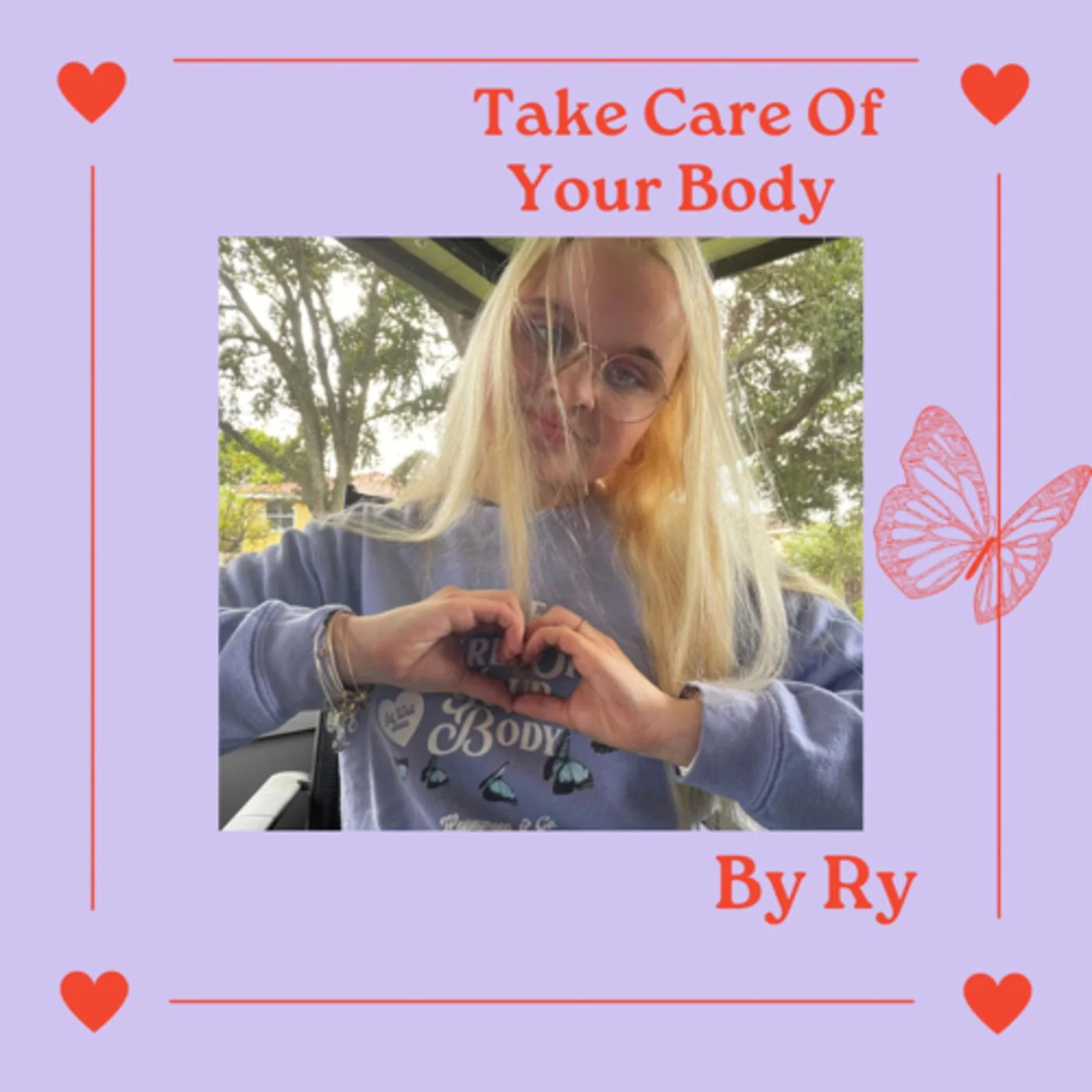
I’m Rylin Rossano—author, podcaster, wellness advocate, and someone who’s had to fight for my own body and peace. I started my podcast, Take Care of Your Body by Ry, when I was 17, sitting in my car after yet another doctor dismissed my chronic illness. I decided if the medical world couldn’t give me answers, I’d create a space for honesty and healing myself.
Now, through my podcast and my writing, I share what I’ve lived: chronic illness, mental health struggles, and recovery. My work is for anyone who’s ever felt too much or not enough, for anyone learning that softness is not weakness.
Author of Once Upon a Time I Survived Myself. Host of Take Care of Your Body by Ry.